
Architecture3 min read
A station for the sky
What if a rooftop connection felt as familiar as stepping onto a railway platform?
Read articleNoise & planning · 5 min read
Measured flyover data, community-response research and planning rules all point the same way: a quieter aircraft that still needs careful siting.
VERTISTATION.TOKYO Editorial
Sources reviewed
Share article

Joby reported 45.2 dBA during a flyover at 500 metres altitude and 100 knots following NASA-assisted acoustic testing, and below 65 dBA at 100 metres from the flight path during planned takeoff and landing profiles. A controlled flyover comparison presented to the Vertical Flight Society found the same aircraft 10–19 dB(A) below three commercial helicopters and two fixed-wing aircraft flown at similar speed and altitude and measured with the same equipment.
Every number carries conditions. NASA’s full-flight-envelope campaign used a 58-channel microphone array and 31 unique test conditions, and found wing-borne cruise the quietest phase while approaches were noisier than departures; hover measurements varied by several decibels within single runs. Prototype results describe one aircraft and specific test profiles—not a universal limit for every eVTOL or every future operation.
Noise is experienced as well as measured. NASA’s 2026 VANGARD study asked 359 participants in Los Angeles, New York City and Dallas–Fort Worth to rate 67 simulated air-taxi sounds; an early finding was that participants from noisier neighbourhoods initially reported greater annoyance, not less. NASA describes these as initial results, with further analysis under way.
Attitudes measured before deployment matter for planners too. EASA’s European societal-acceptance research found 38% of respondents naming noise and 38% naming environmental impacts among their concerns about air taxis. Neither study measures how residents of a particular Tokyo district would react to a specific vertiport; both suggest acceptance is earned operation by operation.
A widely cited Nature Communications model found a single-pilot, 100-kilometre VTOL trip emitted roughly 35% less than a single-occupant combustion car but about 28% more than a battery-electric car, and only beat the electric car per passenger-kilometre when carrying three passengers plus a pilot. A 2025 manufacturing-inclusive assessment estimated around 0.24 kg of CO₂-equivalent per passenger-kilometre for a four-seat, 100-kilometre case—about twice a comparable road EV—falling to roughly 0.05 kg only under a cleaner-electricity scenario.
The practical reading: a climate claim depends on the local electricity mix, seat occupancy, empty repositioning flights and manufacturing assumptions—not on the word “electric” alone. Comparisons also need infrastructure and battery production inside the boundary, which fleet studies identify as significant contributors.
The FAA’s updated vertiport design guidance added a downwash and outwash protection area alongside revised landing-area geometry—physical space beyond the touchdown pad itself. Washington State has published land-use compatibility guidance with compatibility zones addressing noise, downwash and safety. Opposition can also be formal: France’s Conseil d’État ruled in December 2024 on challenges brought by the city of Paris and aviation-noise associations against the authorization of a central vertiport at Austerlitz.
Japan’s Civil Aviation Bureau published interim, non-binding vertiport design guidelines in December 2023, covering land-based, piloted operations under visual flight rules, and a 2025 interim report favours multiple small urban vertiports supported by larger suburban operating and charging bases—while naming residents’ understanding of safety and noise as a social-acceptance requirement. For a dense city like Tokyo, the lesson from these sources is that acoustics, land use and community engagement are as decisive as the design of the deck itself.
A dated editorial review, not a live news feed. Announcements and targets are not evidence of operational services; follow the linked sources for subsequent updates.
Market reporting is separate from the fictional Tokyo 2045 vision. This site's images are AI-generated concepts, not photographs of the named projects. No affiliation with the organisations cited is implied.
What if a rooftop connection felt as familiar as stepping onto a railway platform?
Read article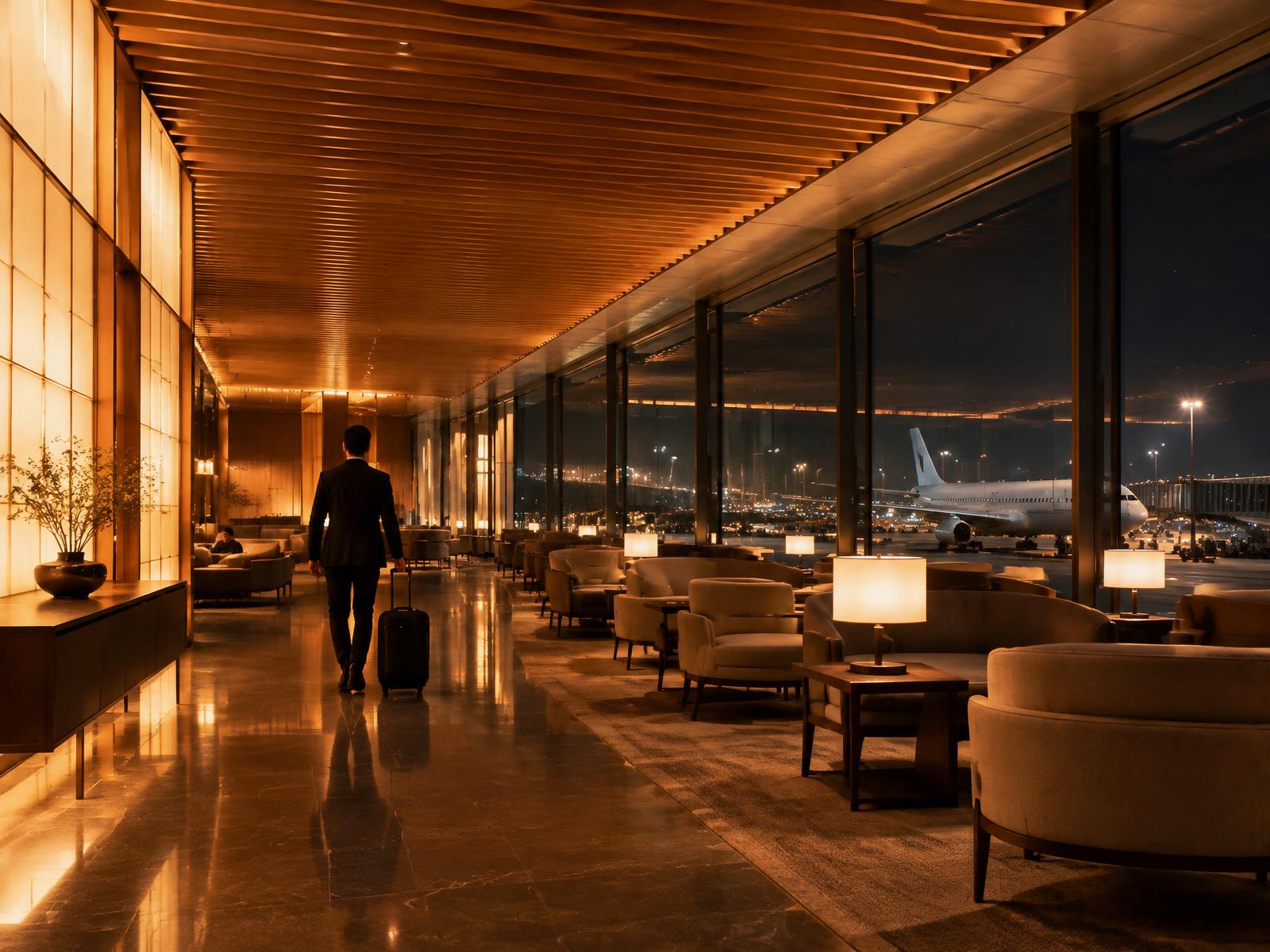
Imagining a passenger journey shaped by light, space and Japanese hospitality.
Read article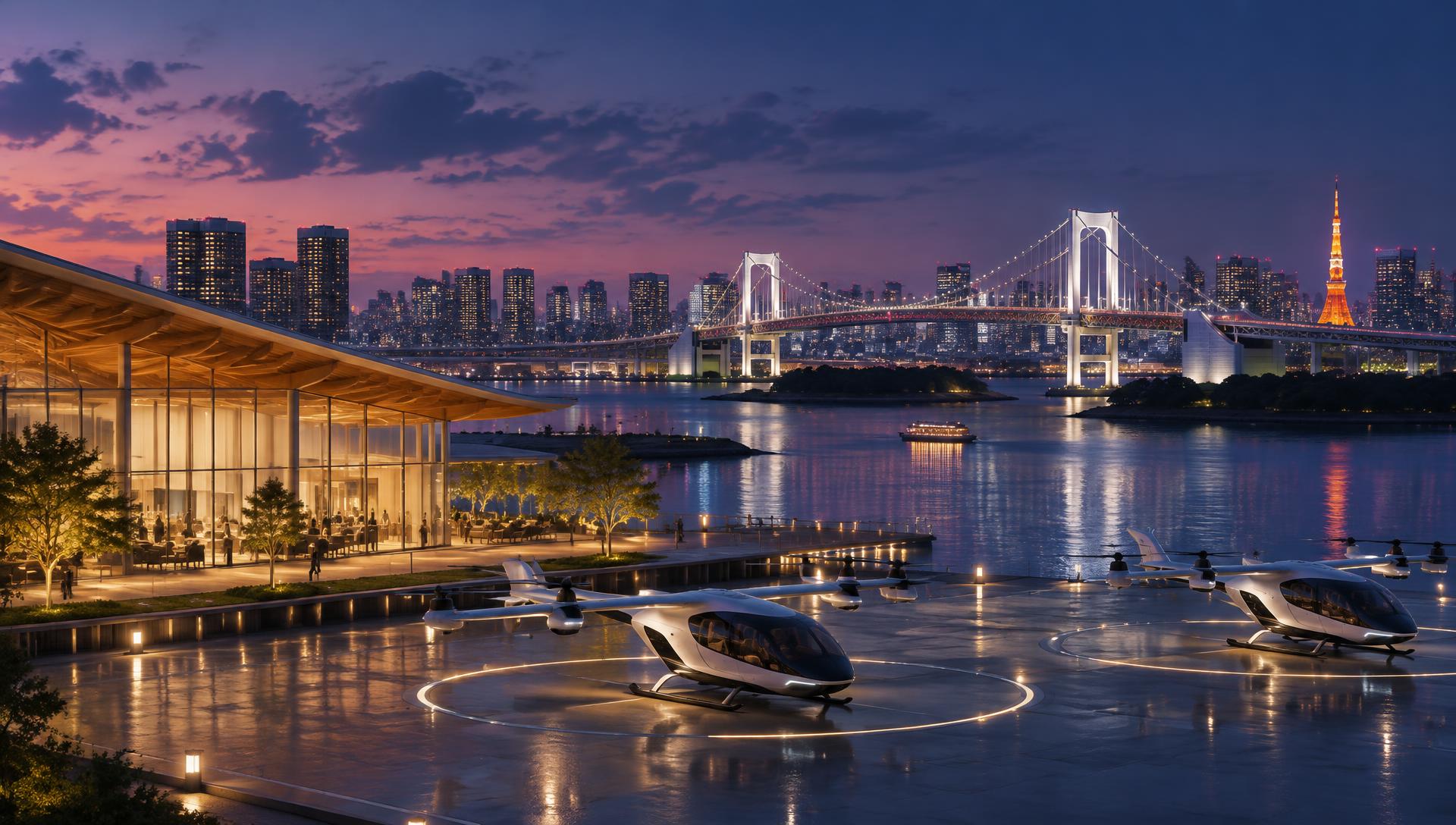
How a place-led digital identity can give an emerging idea a recognisable home.
Read article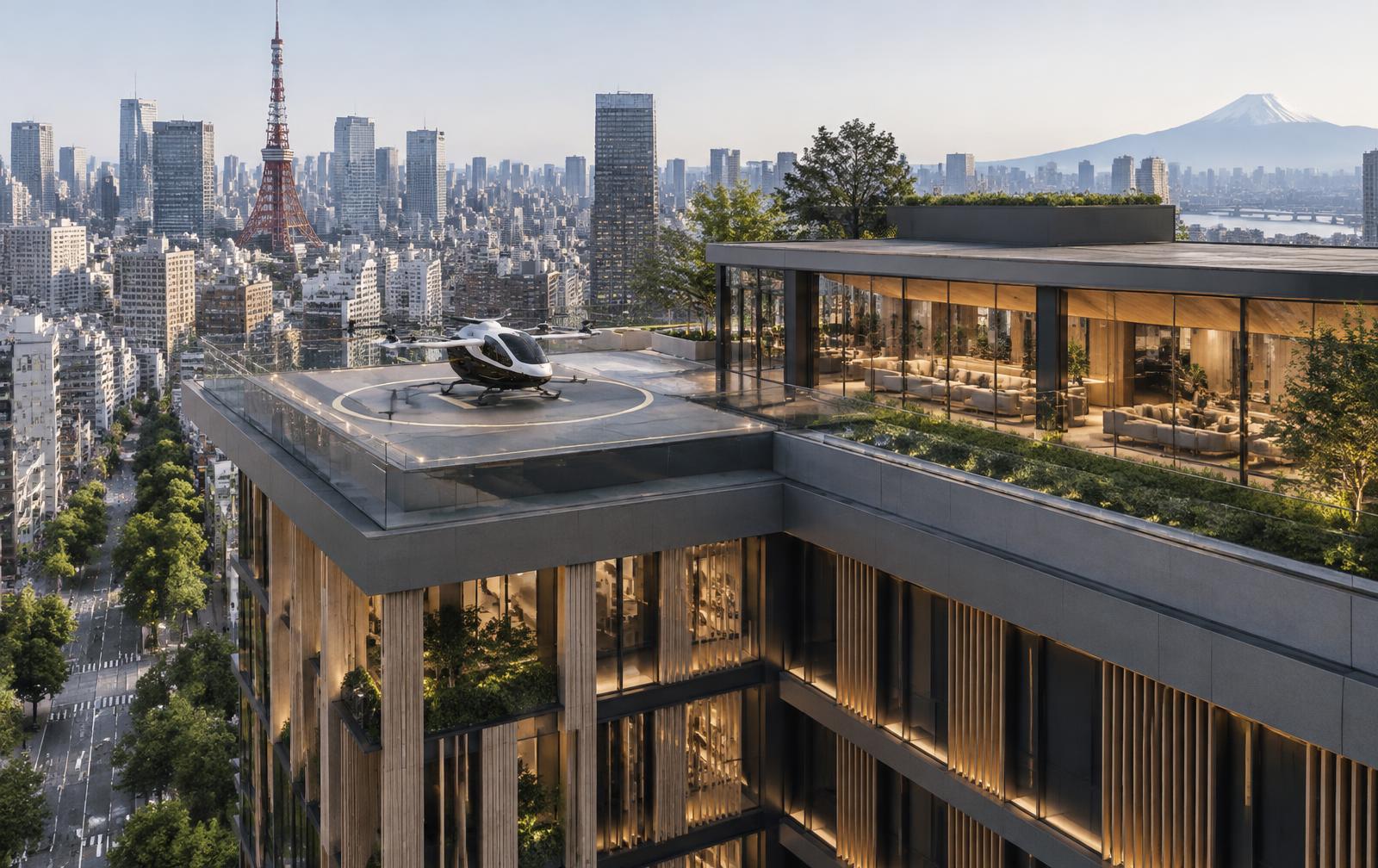
A proposed Wynn resort vertiport and an Ise-Shima feasibility study reveal how hospitality is exploring eVTOL connections—and what remains unproven.
Read articleRecent Japanese feasibility studies and infrastructure planning point toward regional networks, but announced targets are not commercial air taxi services.
Read article
Developers are paying rent for rooftops and building vertiports at major destinations—but no independently verified valuation premium exists yet.
Read article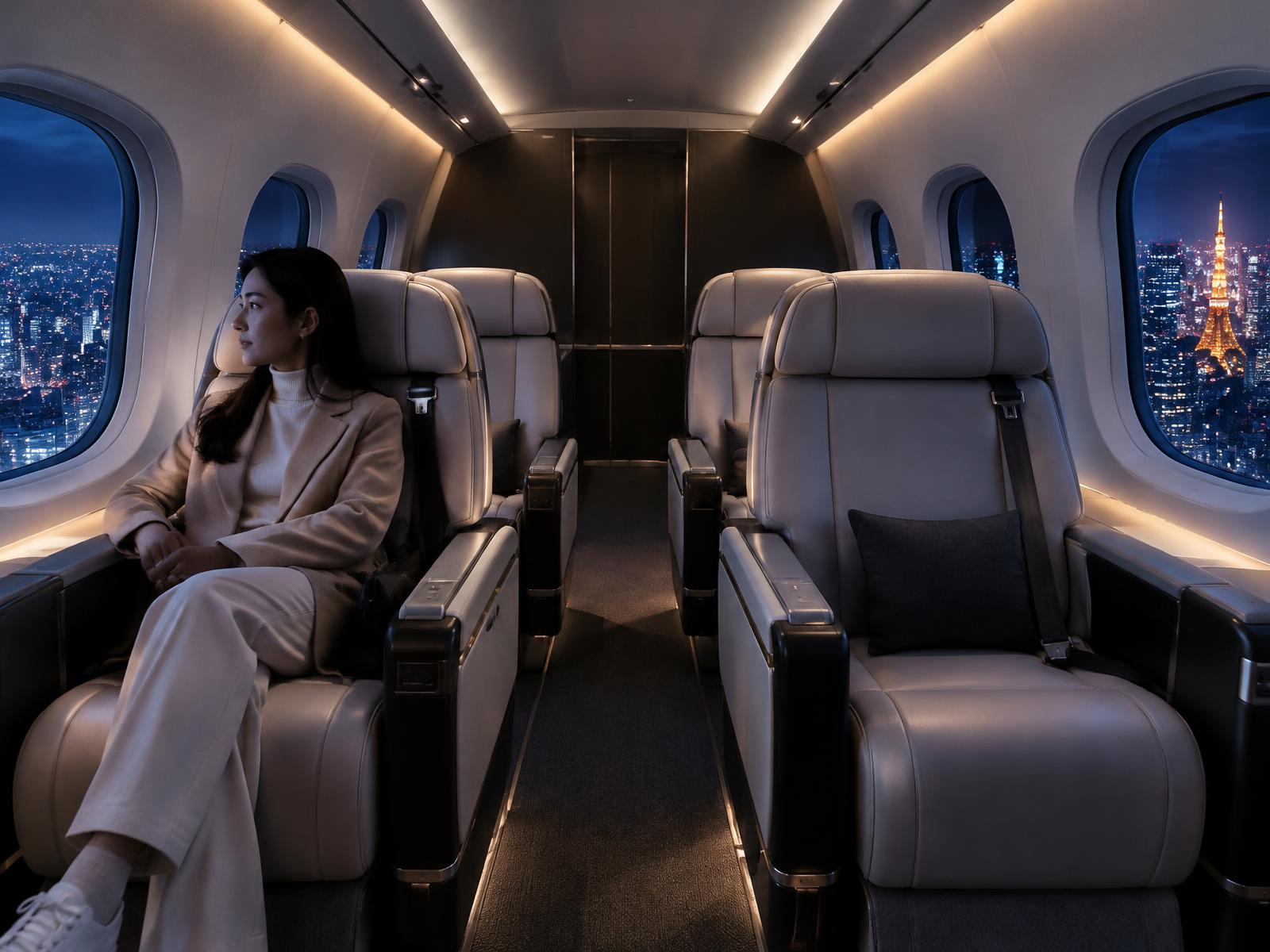
Type certificates, operating rules and pilot programmes are converging—slowly. Where Joby, Archer, Vertical, EHang and the rest actually stand.
Read article
Central Tokyo to Narita in about 15 minutes, taxi-comparable pricing, Kansai postponed to FY2028. The announced plans—and the difference between a route and a ticket.
Read articleSkyports plans a vertiport integrated within the Wynn resort as Ras Al Khaimah moves toward a four-site air taxi network. What the September 2026 agreement does—and does not—confirm.
Read articleA mischievous 2045 daydream: the ten most romantic places to hover over Tokyo with someone you love—and the fine print that keeps it, for now, a fantasy.
Read article