Architecture3 min read
A station for the sky
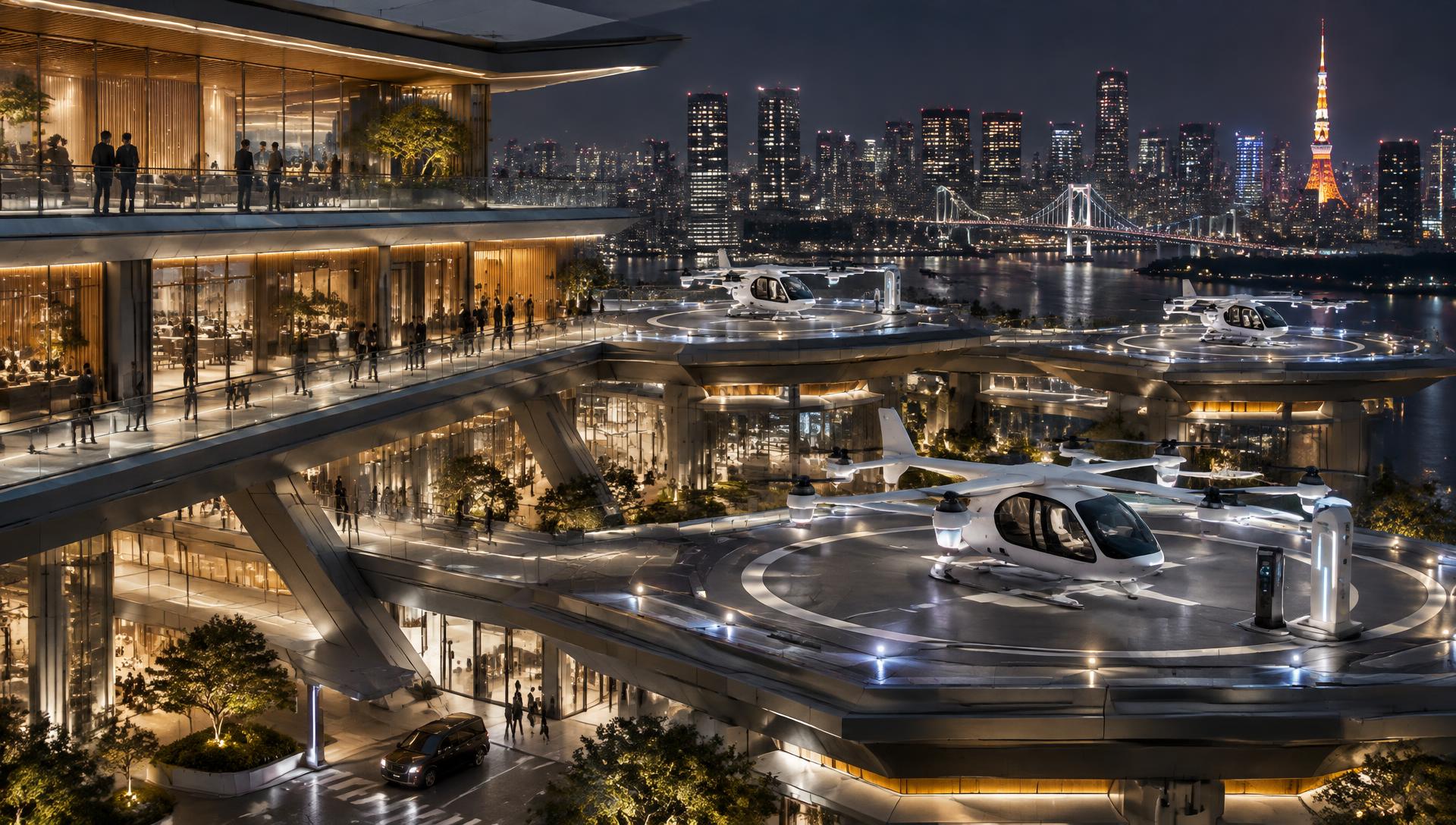
What if a rooftop connection felt as familiar as stepping onto a railway platform?
Read articleMarket watch · Japan · 4 min read
Recent Japanese feasibility studies and infrastructure planning point toward regional networks, but announced targets are not commercial air taxi services.
VERTISTATION.TOKYO Editorial
Sources reviewed
Share article
The sources reviewed on 17 October 2026 show activity around site feasibility, route selection and transport integration. This is a useful market signal for property and hospitality owners, but it does not establish passenger volumes, investment returns or a nationwide operating network.
Rather than attach a speculative market-size forecast, this review follows named projects and their stated stage. Aircraft certification, site permissions, operator readiness and viable demand remain separate milestones.
Skyports’ 3 August announcement describes a Mie Prefecture-backed feasibility study led by Mitsui Fudosan and Ise-Shima Resort Management. It examines passenger demand, routes, potential landing locations, charging requirements and links with rail, road, marine transport and airports.
The opportunity being studied is regional connectivity around tourism destinations. The evidence supports a feasibility-stage description—not an approved hotel rooftop, fixed service timetable or operating air taxi route.
On 3 September 2026, Skyports reported a memorandum of understanding with Oita Prefectural Government, signed the previous day. Its role includes assessing benefits, candidate routes and vertiport locations, and advising on preparations for future services. The announcement describes an initial commercial-operations target of approximately 2028.
That date is an ambition attributed to the announcement, not a verified launch. For hotels around destinations such as Beppu and Yufuin, the relevant question is how a possible connection could fit an actual guest journey, not whether every property should install a landing pad.
Skyports reported nine Japanese AAM subsidy-project wins across six prefectures on 15 September 2026. Its account includes feasibility, basic design and operational-concept work. This indicates developer-reported planning activity; it should not be read as nine completed or commercially operating vertiports.
These releases come from a project participant. They are useful primary accounts of appointments and intentions, but not independent proof that construction, certification or commercial operations have been completed.
Look for published feasibility results, named operators and aircraft, authority decisions, building and infrastructure commitments, and evidence of a usable route network. A demonstration, memorandum or funding award answers a different question from a passenger-service launch.
Review charging capacity, access to existing transport, community impacts and commercial responsibilities early. The most relevant opportunity may be a connection to a nearby vertiport rather than a rooftop facility on the hotel itself. No source reviewed here confirms a commercial hotel rooftop eVTOL service in Tokyo.
A dated editorial review, not a live news feed. Announcements and targets are not evidence of operational services; follow the linked sources for subsequent updates.
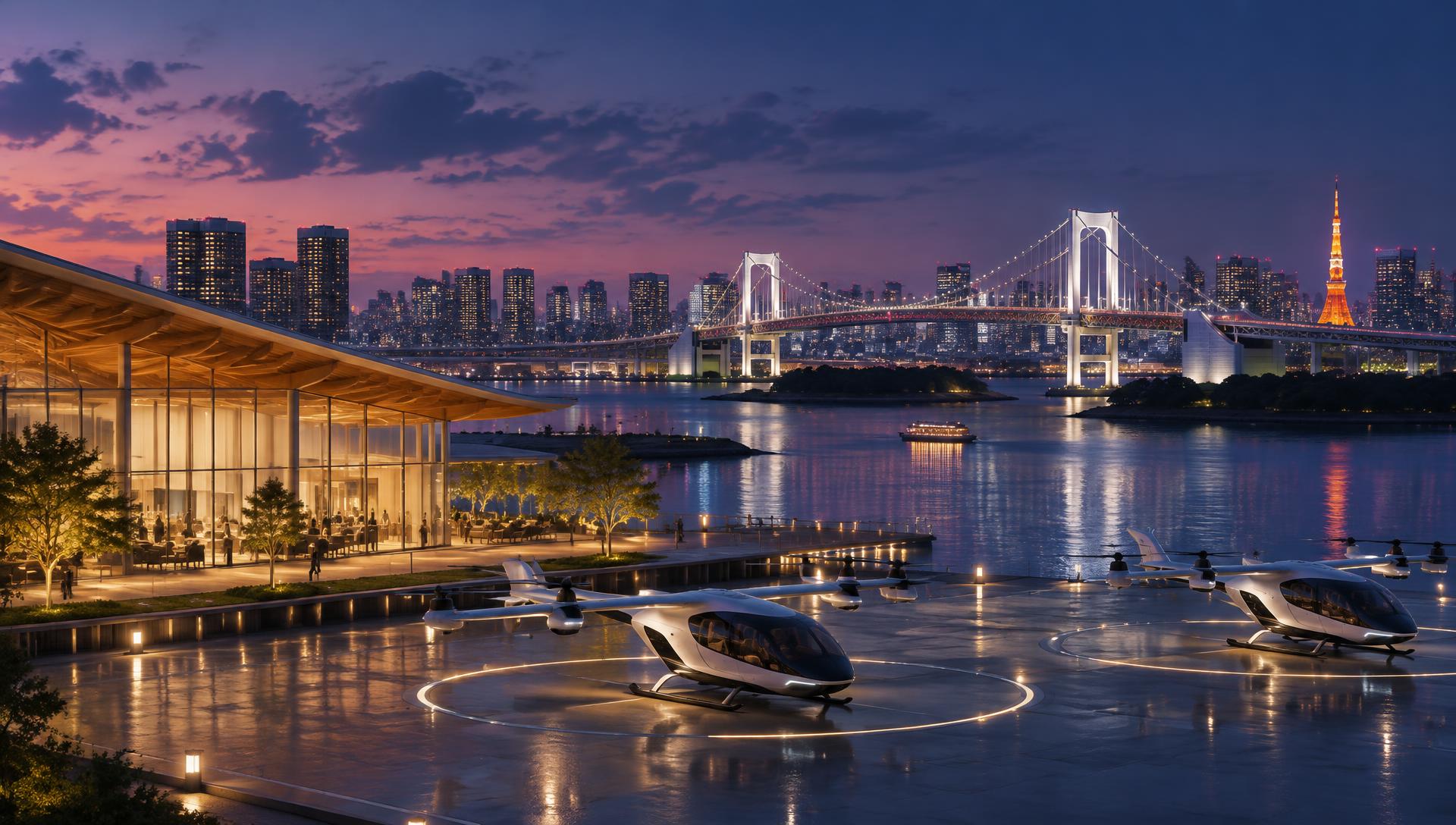
Market reporting is separate from the fictional Tokyo 2045 vision. This site's images are AI-generated concepts, not photographs of the named projects. No affiliation with the organisations cited is implied.
What if a rooftop connection felt as familiar as stepping onto a railway platform?
Read article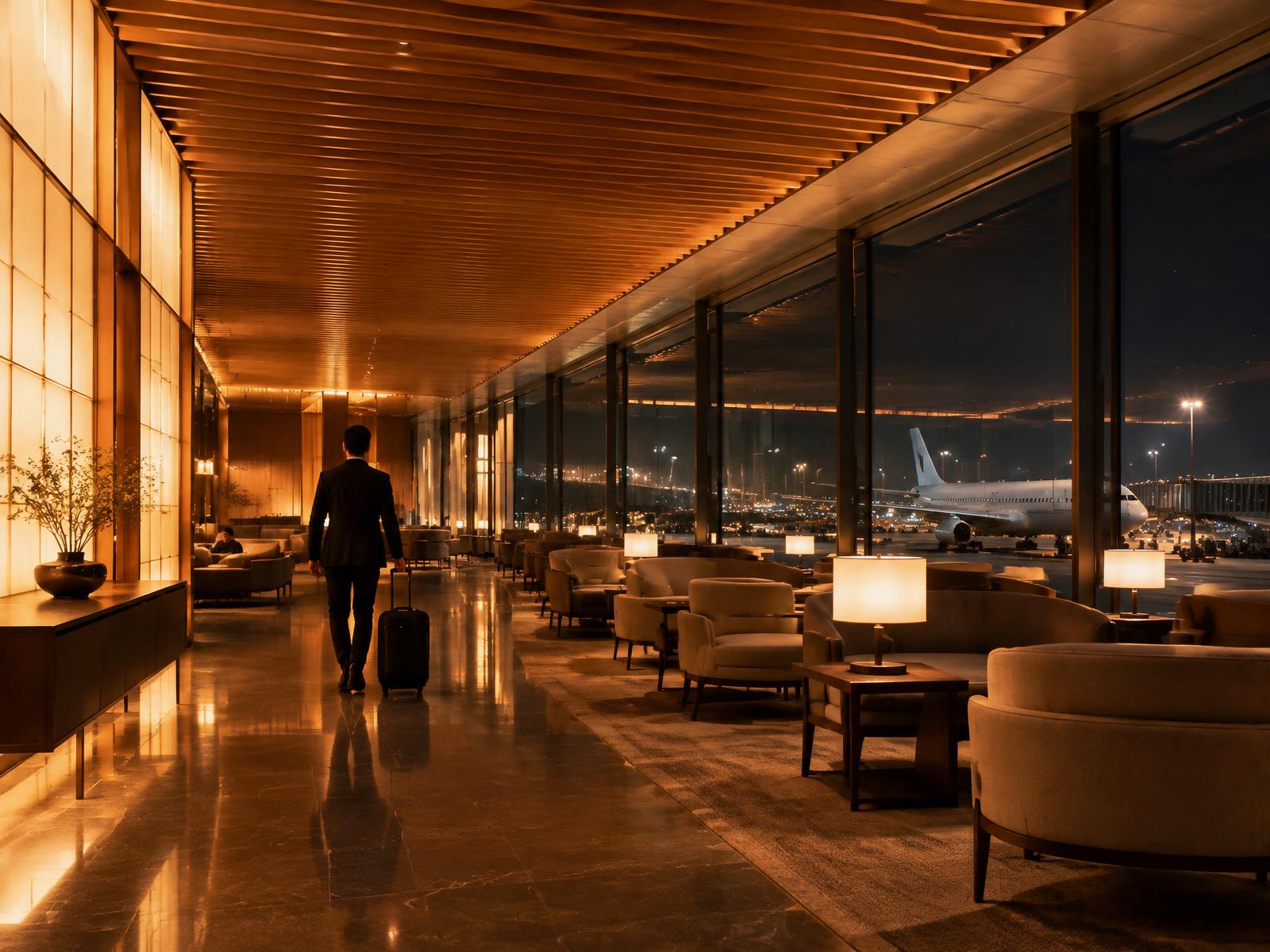
Imagining a passenger journey shaped by light, space and Japanese hospitality.
Read articleHow a place-led digital identity can give an emerging idea a recognisable home.
Read article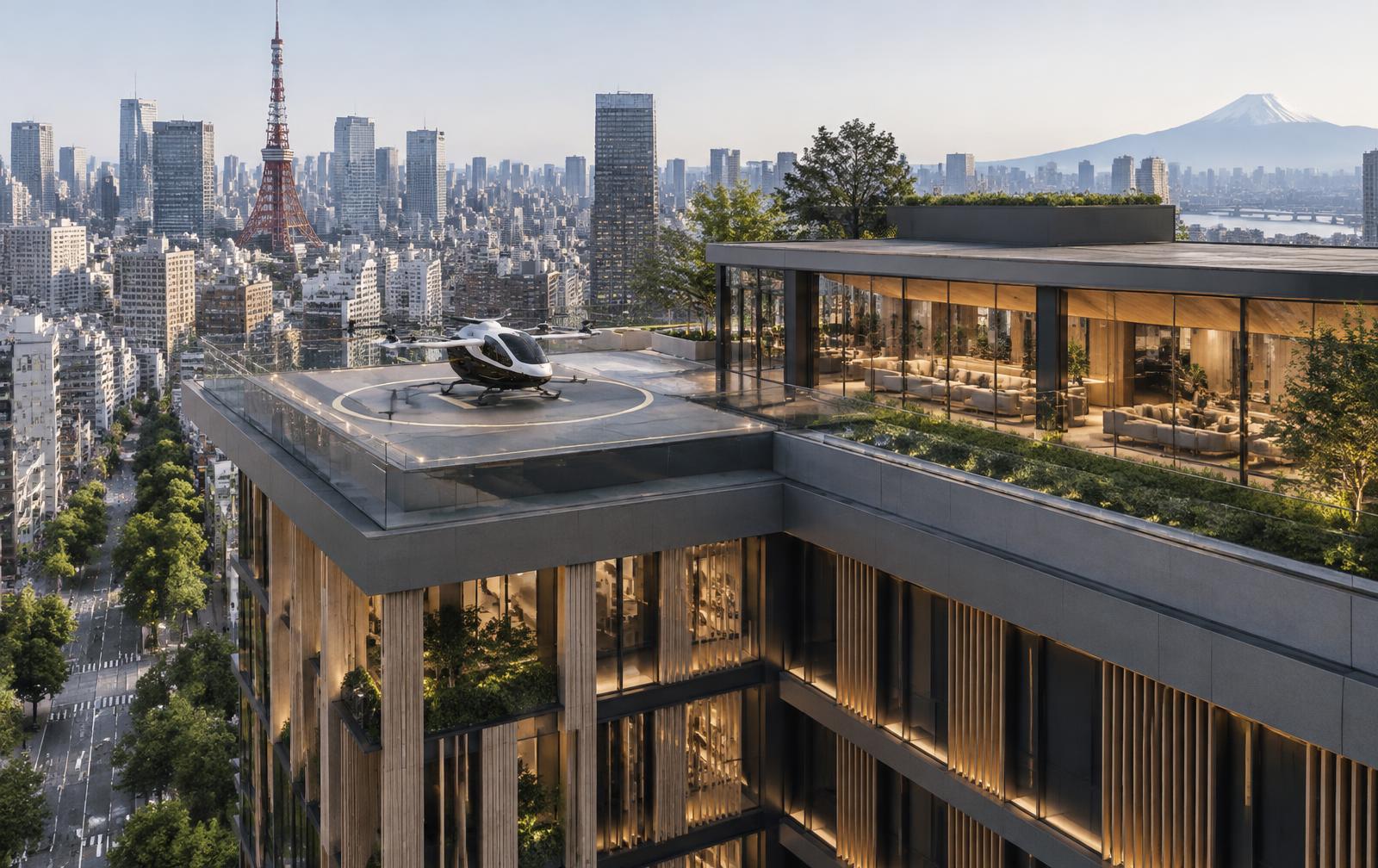
A proposed Wynn resort vertiport and an Ise-Shima feasibility study reveal how hospitality is exploring eVTOL connections—and what remains unproven.
Read article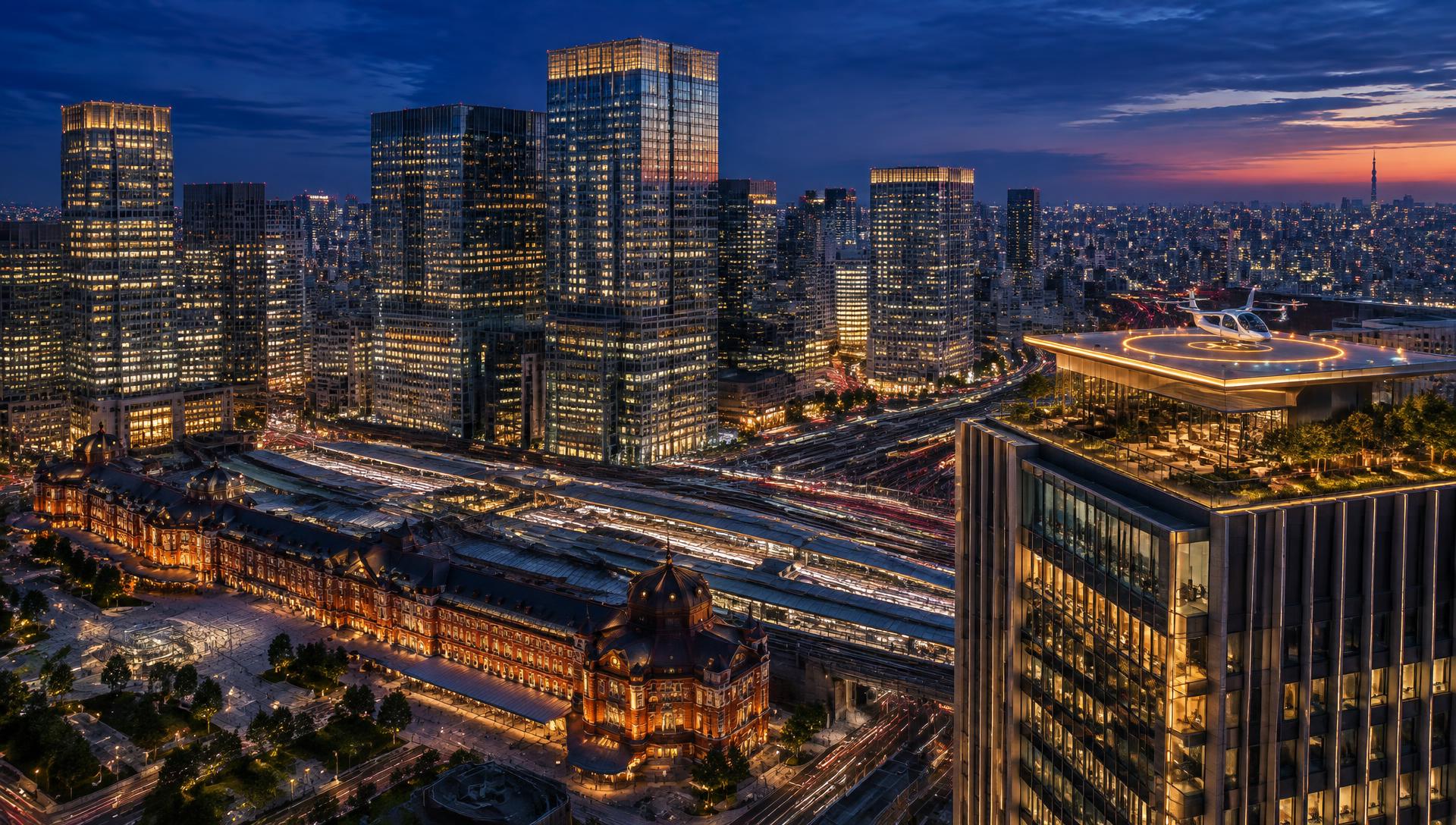
Measured flyover data, community-response research and planning rules all point the same way: a quieter aircraft that still needs careful siting.
Read article
Developers are paying rent for rooftops and building vertiports at major destinations—but no independently verified valuation premium exists yet.
Read article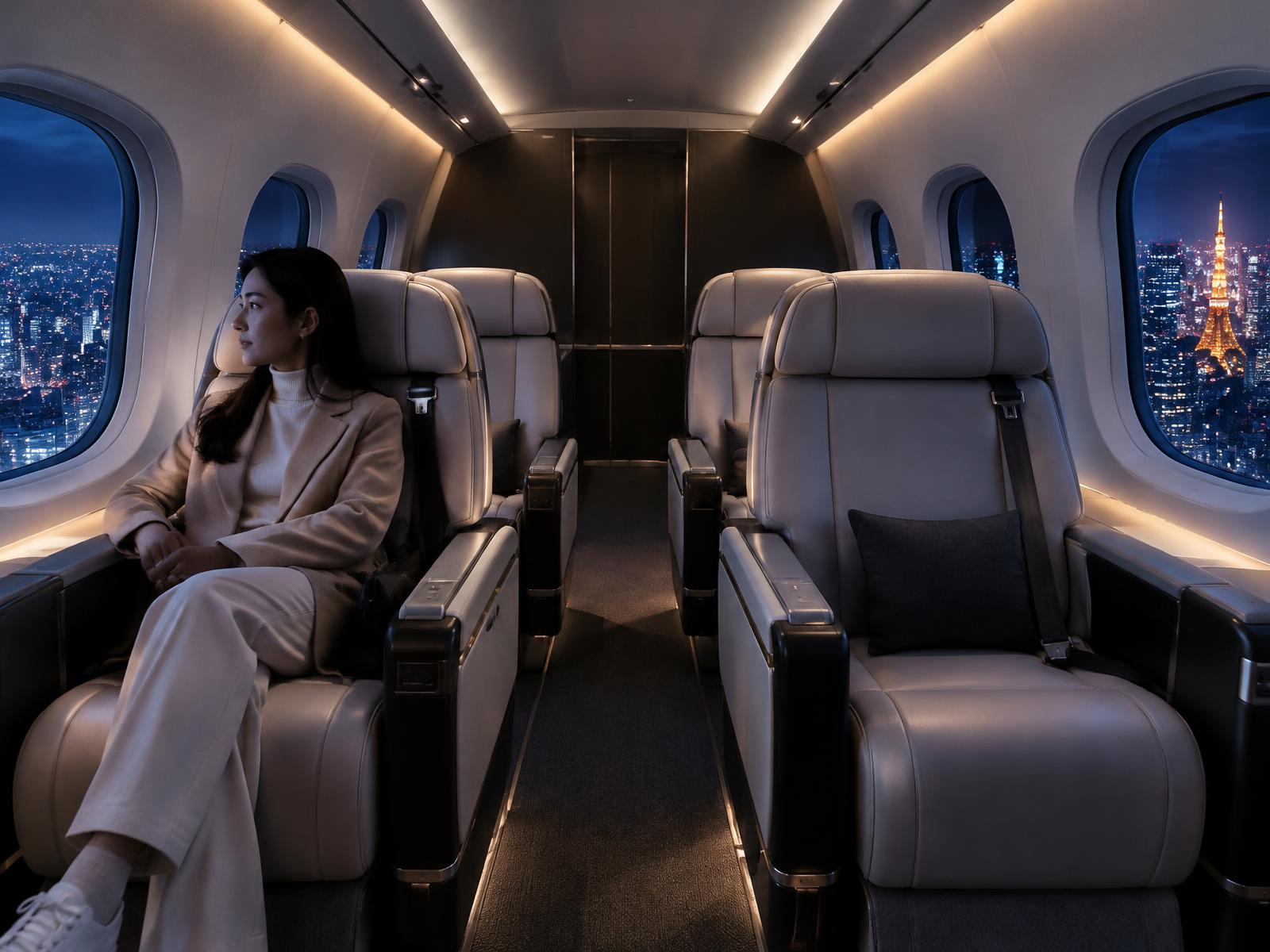
Type certificates, operating rules and pilot programmes are converging—slowly. Where Joby, Archer, Vertical, EHang and the rest actually stand.
Read article
Central Tokyo to Narita in about 15 minutes, taxi-comparable pricing, Kansai postponed to FY2028. The announced plans—and the difference between a route and a ticket.
Read articleSkyports plans a vertiport integrated within the Wynn resort as Ras Al Khaimah moves toward a four-site air taxi network. What the September 2026 agreement does—and does not—confirm.
Read articleA mischievous 2045 daydream: the ten most romantic places to hover over Tokyo with someone you love—and the fine print that keeps it, for now, a fantasy.
Read article