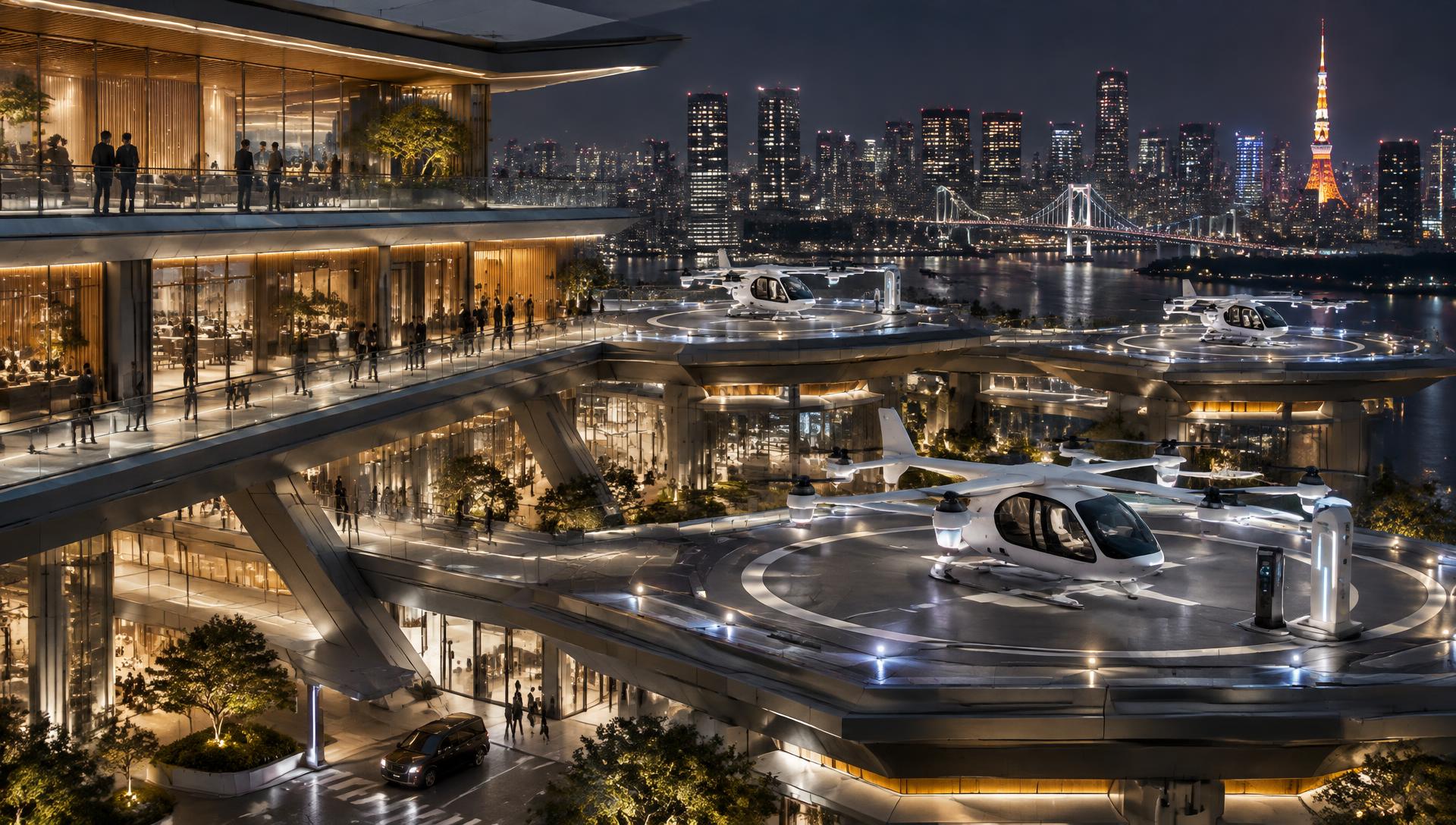
Architecture3 min read
A station for the sky
What if a rooftop connection felt as familiar as stepping onto a railway platform?
Read articleHotels & vertiports · 5 min read
Skyports plans a vertiport integrated within the Wynn resort as Ras Al Khaimah moves toward a four-site air taxi network. What the September 2026 agreement does—and does not—confirm.
VERTISTATION.TOKYO Editorial
Sources reviewed
Share article
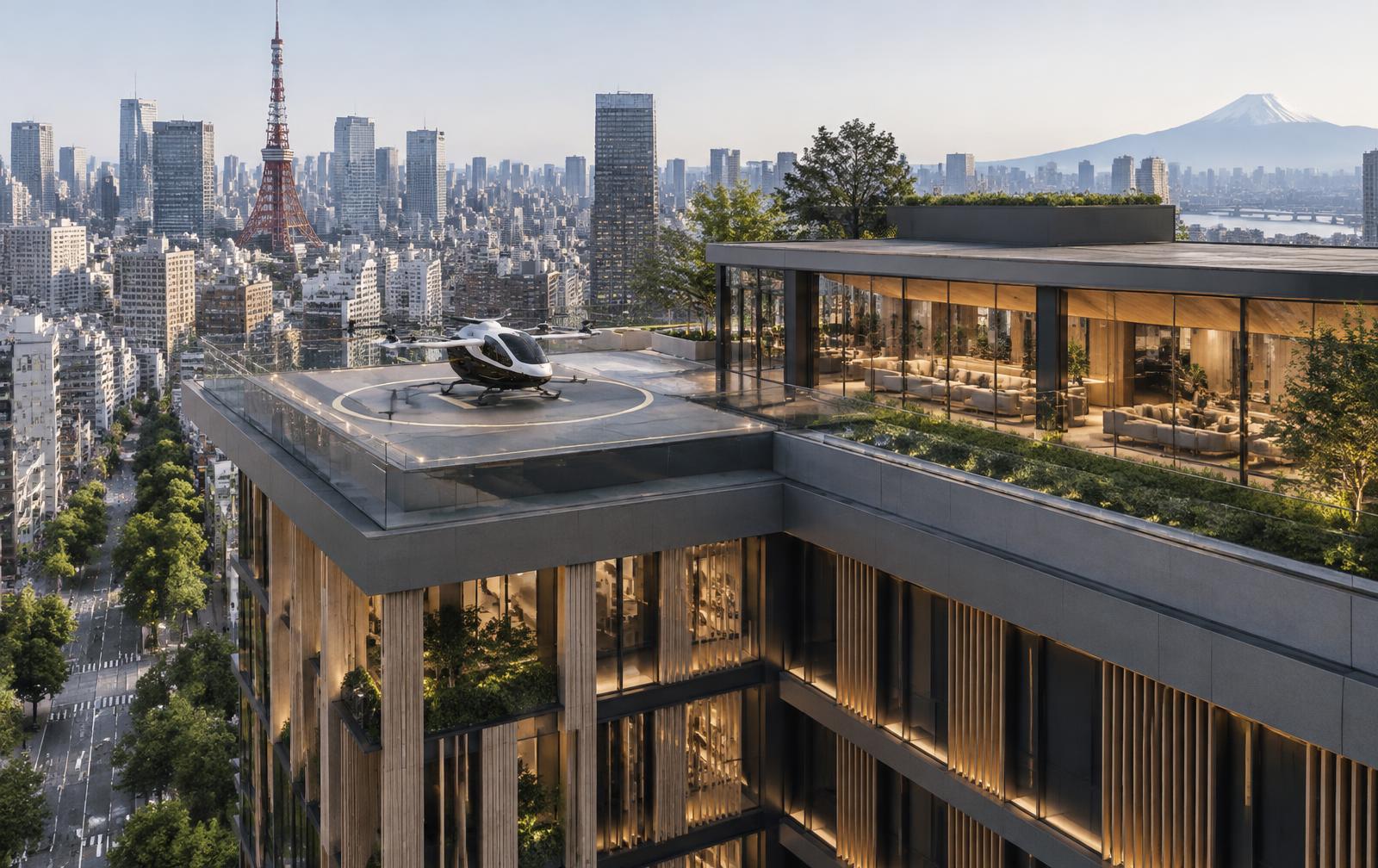
Skyports’ Ras Al Khaimah project page says its Al Marjan Island vertiport will be integrated within the new Wynn Al Marjan Island resort. This makes the proposal a particularly relevant example for hotel owners considering advanced air mobility: the connection is being planned around a hospitality destination, not just an airport.
The wording matters. The source does not establish that the facility will sit on a hotel roof. A resort-integrated vertiport could take several forms; without a published site layout, describing this as a confirmed Wynn rooftop vertiport would go beyond the evidence. Wynn’s own website describes the resort as under construction and debuting in 2027, but the pages reviewed do not independently confirm the vertiport’s placement.
On 28 September 2026, Skyports announced a binding Definitive Agreement with the Ras Al Khaimah Transport Authority (RAKTA) to develop and operate the emirate’s advanced air mobility infrastructure. Its announcement describes a phased four-vertiport network, with Phase 1 focused on Al Marjan Island and Jebel Jais, and two further facilities envisaged as the network expands.
The proposed network is intended to connect destinations within Ras Al Khaimah and link the emirate with neighbouring emirates, initially Dubai. A binding infrastructure agreement is more concrete than a concept rendering or an expression of interest. It is still not evidence that the Wynn-linked facility is complete, approved for passenger operations or selling tickets.
Skyports’ September announcement targets commercial service in the third quarter of 2027. Separately, Wynn says its resort is due to debut in 2027. These are distinct schedules, reported by different project participants; neither establishes that the resort and vertiport will open together.
The reviewed sources do not establish a published passenger timetable, fare or booking offer for the Wynn-linked site. Aircraft readiness, site permissions and operational arrangements remain separate questions. Travellers should not treat a planned vertiport as an available resort-transfer service.
RAKTA’s 29 September 2025 announcement names Joby Aviation and Skyports in a collaboration to design, develop and operate an air taxi service in Ras Al Khaimah, using Joby’s all-electric vertical take-off and landing aircraft. That primary-source announcement establishes Joby’s role in the wider air taxi partnership.
The September 2026 definitive agreement is specifically an infrastructure agreement between RAKTA and Skyports. It does not itself reconfirm a dedicated aircraft, operating schedule or operator for the Wynn-linked facility individually. Network-level partnerships should not be presented as completed operating arrangements for every site.
The useful lesson is destination-led planning. A resort connection only becomes valuable if it fits a viable route network and the whole guest journey: arrival formalities, luggage, accessible transfers, waiting time and alternatives when flying is disrupted. A visually dramatic landing deck is not the same thing as a dependable door-to-door service.
For hotel teams evaluating their own vertiport, begin with independent demand, aviation, structural and planning assessments. Consider an on-site facility against a connection to a nearby vertiport, and test costs, responsibilities, noise and charging requirements before claiming higher room rates or property values. Wynn’s planned integration is an instructive proposal—not proof that every hotel needs a rooftop facility.
This review reflects sources checked on 17 October 2026. VERTISTATION.TOKYO is independent of Wynn, Skyports, RAKTA and Joby. The accompanying illustration is a fictional concept, not a photograph or an approved design of Wynn Al Marjan Island.
A dated editorial review, not a live news feed. Announcements and targets are not evidence of operational services; follow the linked sources for subsequent updates.
Market reporting is separate from the fictional Tokyo 2045 vision. This site's images are AI-generated concepts, not photographs of the named projects. No affiliation with the organisations cited is implied.
What if a rooftop connection felt as familiar as stepping onto a railway platform?
Read article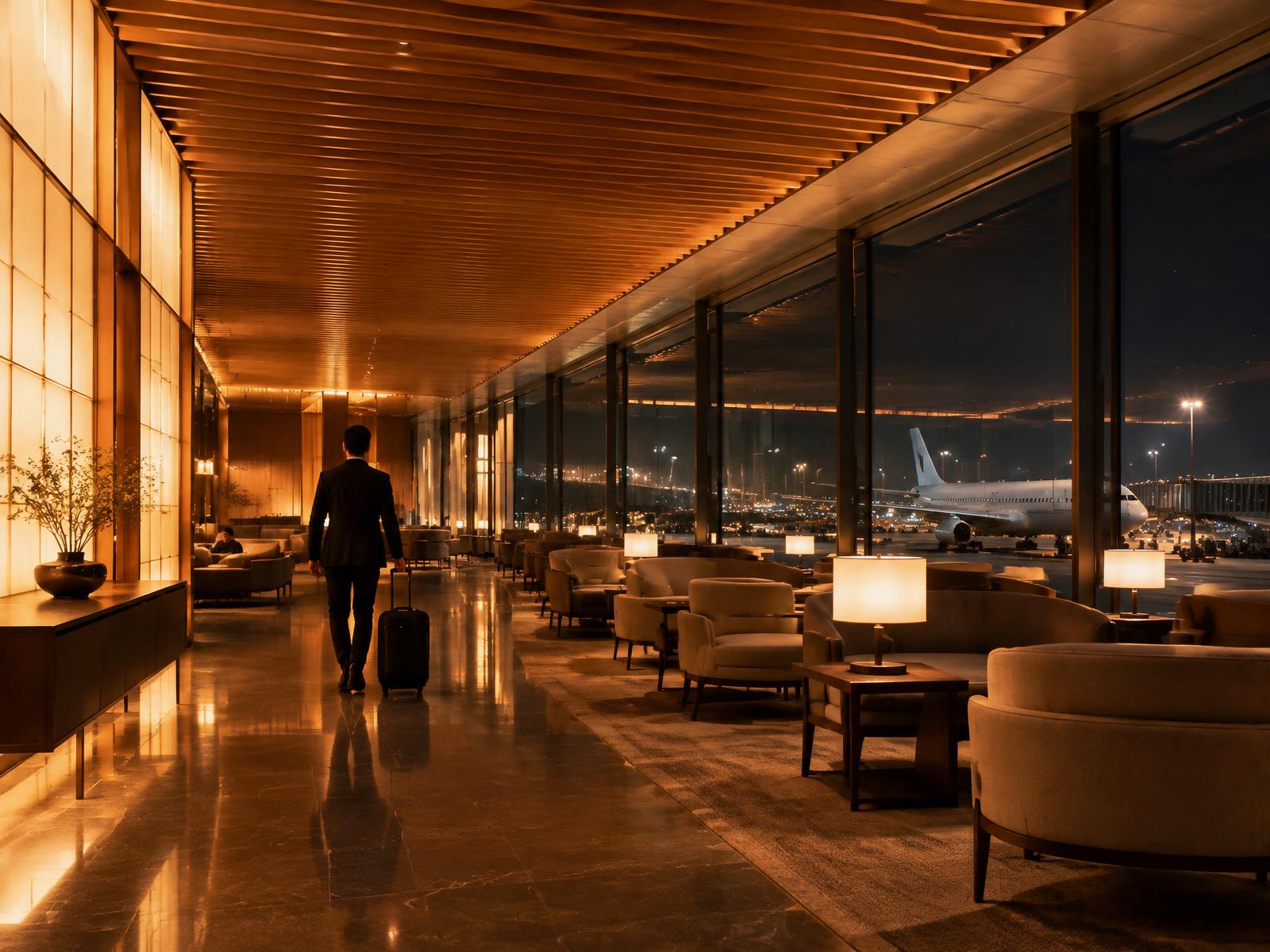
Imagining a passenger journey shaped by light, space and Japanese hospitality.
Read article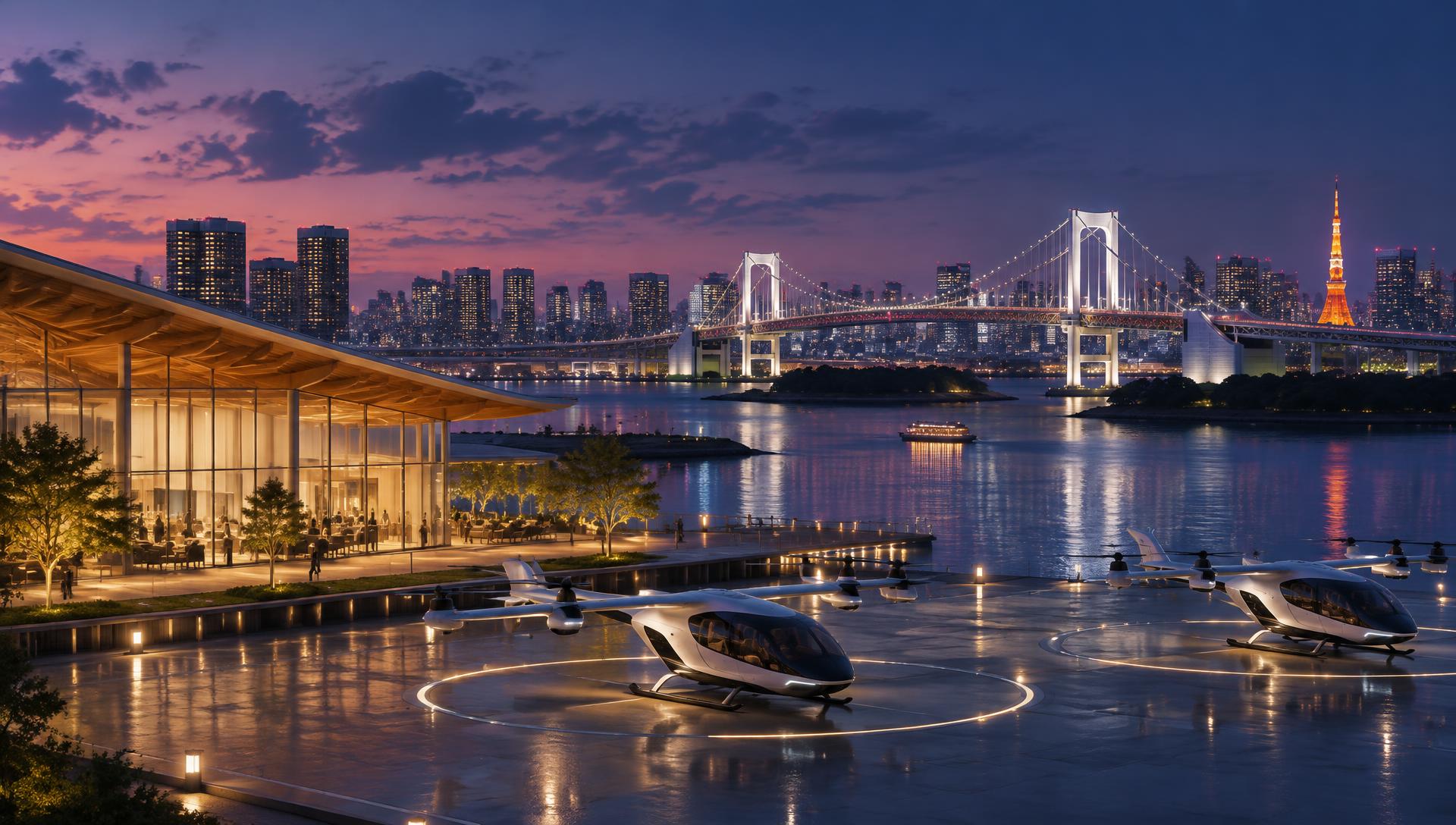
How a place-led digital identity can give an emerging idea a recognisable home.
Read articleA proposed Wynn resort vertiport and an Ise-Shima feasibility study reveal how hospitality is exploring eVTOL connections—and what remains unproven.
Read articleRecent Japanese feasibility studies and infrastructure planning point toward regional networks, but announced targets are not commercial air taxi services.
Read article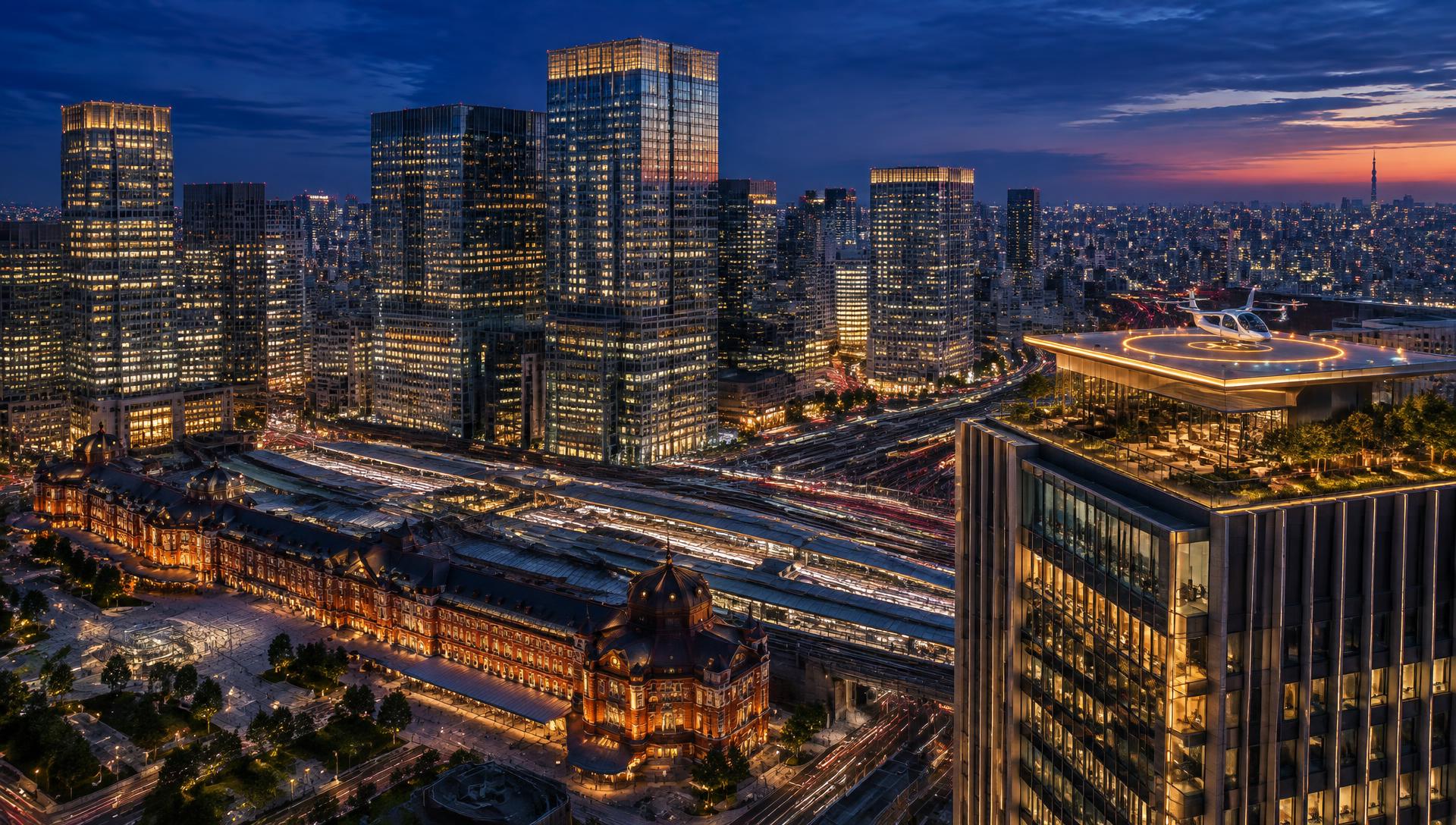
Measured flyover data, community-response research and planning rules all point the same way: a quieter aircraft that still needs careful siting.
Read article
Developers are paying rent for rooftops and building vertiports at major destinations—but no independently verified valuation premium exists yet.
Read article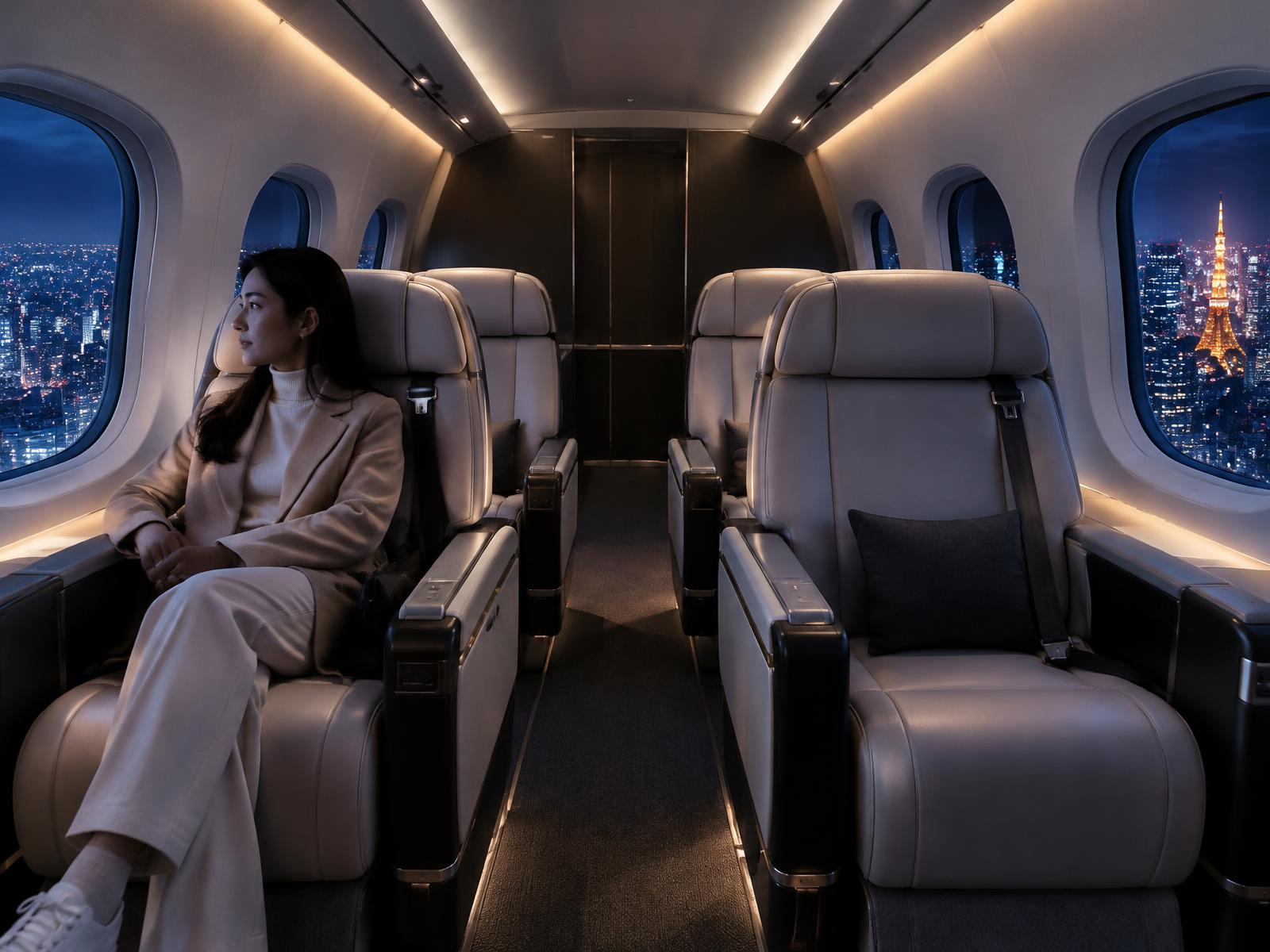
Type certificates, operating rules and pilot programmes are converging—slowly. Where Joby, Archer, Vertical, EHang and the rest actually stand.
Read article
Central Tokyo to Narita in about 15 minutes, taxi-comparable pricing, Kansai postponed to FY2028. The announced plans—and the difference between a route and a ticket.
Read articleA mischievous 2045 daydream: the ten most romantic places to hover over Tokyo with someone you love—and the fine print that keeps it, for now, a fantasy.
Read article